Vehicle Stopping Function Mobile Traffic Barriers
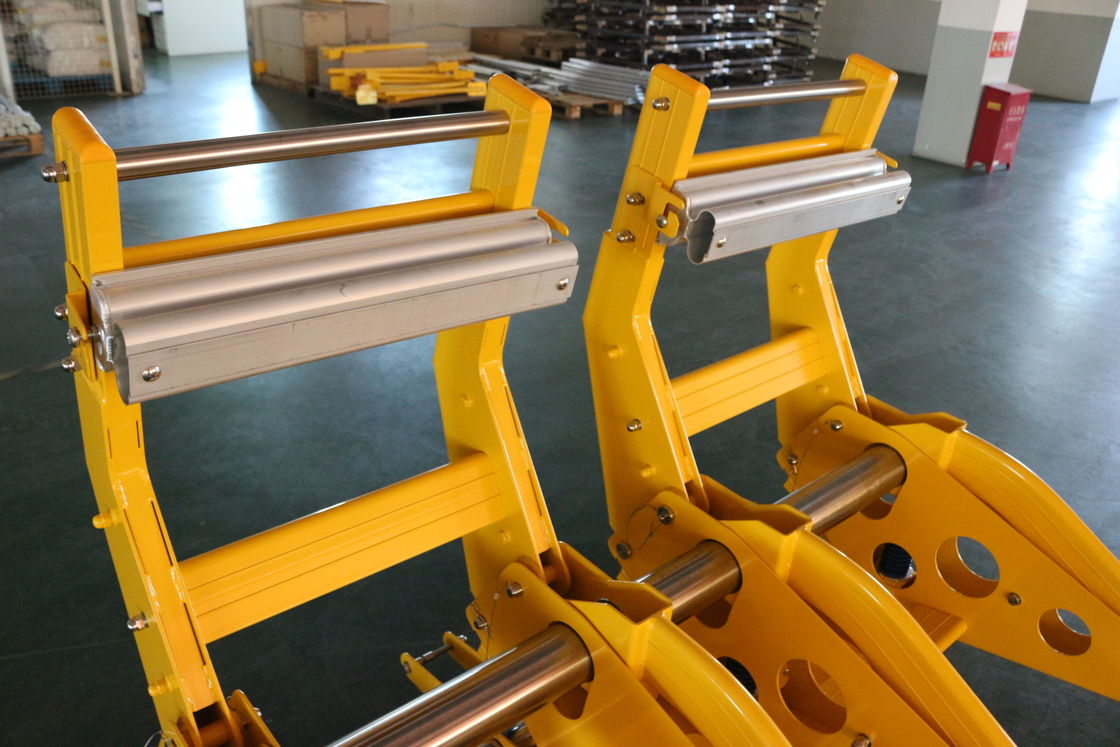
The Tomaruzo Mobile Vehicle Barrier is a high-quality active safety protection device specially designed for highways, expressways, and high-risk work zones. With its optimized 1200mm height, patented energy-absorbing materials, and dual-layer rust-proof finishing, it provides reliable life-saving buffer protection for road construction, bridge and tunnel operations, and emergency rescue personnel.
Technical Specifications

| Brand & Model |
RMHs Tomaruzo |
| Product Height |
1200mm |
| Product Weight |
132kg (single unit) |
| Dimensions |
Length 1800 × Width 800 × Height 1200mm |
| Main Material |
Aluminum + Rubber |
| Surface Finish |
Galvanized + Powder Coated (rust-proof) |
| Product Color |
Yellow / Orange |
| Structure Type |
Modular, detachable (sold as a set of 2 units) |
| Core Function |
Stops large vehicles from entering work zones |
| Application Scenarios |
Highway, municipal road, bridge and tunnel construction, emergency rescue |
Vehicle Stopping Function
When a vehicle collides with Tomaruzo II, the arrow board is pushed in direction A. Using the lever principle, the four extended legs of the device turn upward to lift the front wheels of the vehicle and assist in parking. The impact of the collision is transmitted to the bottom rubber, and the friction with the ground stops the vehicle.
Crash Test Performance
The stopping distance of a 10-ton vehicle traveling at 80km/h is shortened by approximately 5 meters when brakes are applied in conjunction with the barrier.
Shock Absorber Technology
Eight shock absorbers effectively absorb the impact of vehicles that have entered diagonally with an approach angle of up to 25°.
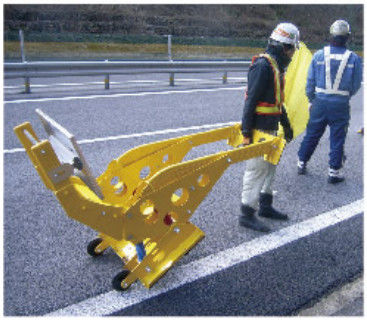
Setting Example
Product Advantages
- Active Energy Absorption, Not Rigid Blocking: Uses patented aluminum material that deforms in a controlled manner to absorb impact energy, allowing vehicles to stop safely during cushioning.
- Lever-Action Wheel Lift, Efficient Braking: Employs lever principle to lift vehicle front wheels while rubber base grips road surface for forced deceleration.
- Flame-Retardant Design: Aluminum material minimizes spark production upon collision, reducing fire risk from fuel leakage.
- Reliable Performance: Tested by Japan Automobile Research Institute, proven to shorten braking distance of 10-ton truck at 80km/h by nearly 5 meters.
- Double Rust Protection: Hot-dip galvanizing + electrostatic powder coating ensures rust-free performance for 5-10 years of outdoor use.
- All-Weather High Visibility: High-visibility engineering yellow/orange body with optional LED arrow board for 24/7 warning capability.
- Modular Design: Sold as set of two units, disassembles into 8 parts. Two people can quickly assemble without heavy machinery.
- Rapid Response: Can be assembled and operational within 10 minutes of arriving on-site.
Frequently Asked Questions
What is this product used for?
It's placed behind highway or road construction zones to prevent失控 vehicles from crashing into workers. If a vehicle loses control and hits it, the barrier absorbs the impact and brings it to a safe stop.
How does it stop a vehicle?
Three steps: ① Lifts the vehicle's front wheels; ② Rubber base grips the road to create friction and slow it down; ③ Aluminum deforms to absorb impact energy. The vehicle stops within a short distance.
It weighs 132kg - how do you move it?
It has wheels at the bottom, so one person can push it. It's also detachable - two people can carry the parts, and it fits in a pickup truck for transport.
Will it rust outdoors?
No. It has double rust protection (galvanized + powder coated), so it won't rust for 5-10 years of outdoor use.
Is it visible at night?
Yes. The body is bright yellow/orange, and you can mount an LED arrow board on top. It's highly visible day and night.
Can two people really install it?
Yes. One set breaks down into 8 parts, and two people can assemble it in about 10 minutes - no crane or tools needed.
Is it reliable? Has it been tested?
Yes. It was tested by the Japan Automobile Research Institute and proven to shorten the braking distance of an 80km/h 10-ton truck by nearly 5 meters. The results are backed by data.
Where can it be used?
Highway maintenance, municipal road construction, bridge and tunnel operations, accident scene isolation, and temporary lane closures.


 Your message must be between 20-3,000 characters!