Product Q&A
Q1: What is this product?
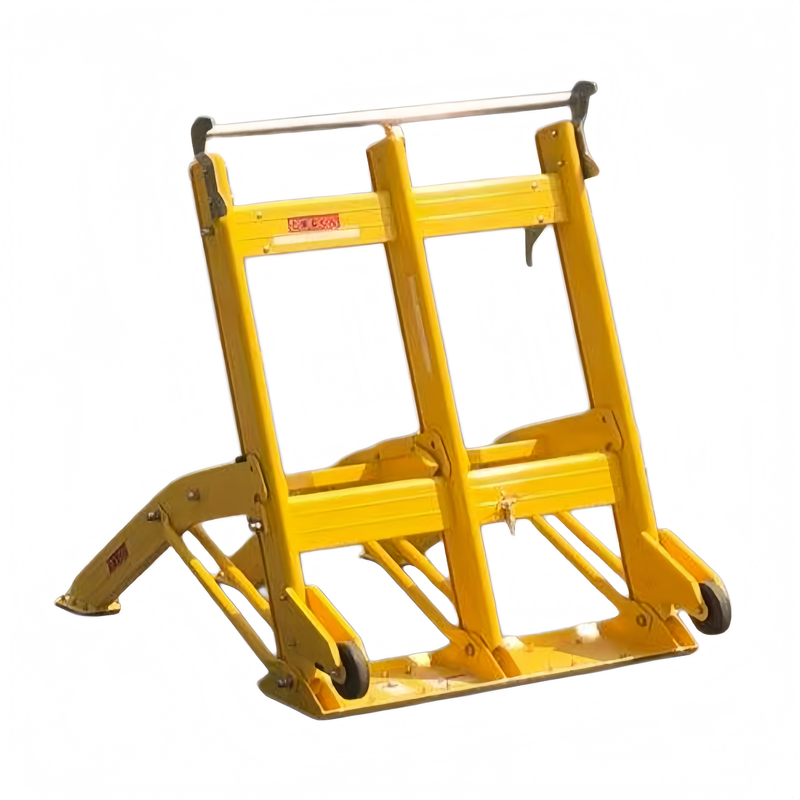
A: Tomarukun Mini Stopping Device - a lightweight safety device designed for warning and vehicle interception at construction sites.
Q2: Where is it mainly used?
A: Municipal road construction, road maintenance, temporary work zones, traffic flow guidance, and other low-speed areas requiring temporary isolation.
Q3: How heavy is it? Is it easy to move?
A: Weighs 25kg. Equipped with bottom wheels and foldable design - one person can easily push and move it without mechanical equipment.
Q4: How does it stop the vehicle?
A: Upon vehicle impact, the device rapidly lifts the front wheels through lever principle, redirecting kinetic energy to the ground. At the same time, the specially designed rubber pad at the bottom generates high friction with the ground to achieve smooth braking.
Q5: What is the stopping distance?
A: On dry asphalt roads, approximately 8.7 meters at 60km/h, and approximately 3.0 meters at 40km/h.
Q6: How is it deployed and used?
A: Push to the perimeter of the work area → release the folding lock buckle → lower the front support arm to working position → ensure bottom rubber pad fully contacts the ground → ready for use upon placement.
Q7: How to store it after use?
A: Lift the front support arm upward → fasten the folding lock buckle → push to the warehouse or designated storage location. The entire process can be completed by one person.
Q8: Can it be used at night?
A: Yes. The product itself is high-visibility engineering yellow, and can be optionally equipped with an LED indicator board for excellent warning effectiveness at night or in low-visibility environments.
Q9: Can it be used in rain or snow?
A: Recommended for use on dry, level asphalt or concrete surfaces. Wet or slippery surfaces such as rain or snow may affect braking performance and should be used with caution.
Q10: How much space does it save when folded?
A: Height is 1080mm when deployed and reduces to 365mm when folded - a reduction of nearly two-thirds. Transportation and storage are both convenient.
Q11: Is the material environmentally friendly?
A: The main body is made of high-strength aluminum alloy, which is recyclable. The material itself is non-flammable and will not catch fire upon collision.
Q12: What are the advantages over traditional traffic cones?
A: Traffic cones provide warning only and collapse upon impact - they cannot intercept. Tomarukun provides both long-distance warning and physical interception braking - the combination of two defense layers.
Q13: What are the advantages over concrete barriers?
A: Concrete barriers can intercept, but weigh hundreds of kilograms and require a crane to move. Tomarukun weighs only 25kg - one person can push it away and deploy it in just 1 minute.
Q14: Is the LED indicator board standard?
A: No, it is an optional accessory. Customers can order it separately according to actual needs.
Q15: What daily maintenance does the product require?
A: Check rubber pad wear and folding lock buckle tightness monthly, wipe the surface to keep clean; check the sprayed surface quarterly, touch up paint promptly if damaged.
Q16: Can it continue to be used after a collision?
A: After a severe collision, the product structure must be thoroughly inspected for deformation or damage. It can only be reused after confirming it is intact.

 Your message must be between 20-3,000 characters!