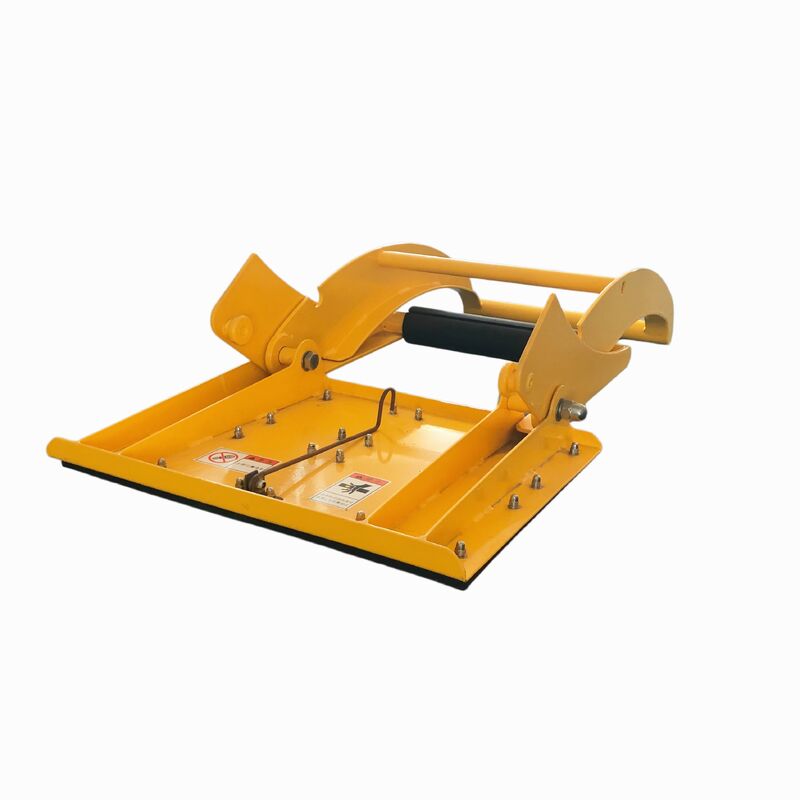
Place of Origin:
CHINA
Brand Name:
RMHs
Certification:
ISO 9001
Model Number:
STOPPY
Contact Us
The HITOMARUKUN is the smallest and lightest mobile crash barrier in the RMHs series, specifically engineered for low-speed urban road sections, municipal construction zones, and residential work sites. Its non-lethal physical interception design effectively prevents errant vehicles from entering hazardous areas, ensuring safety for construction personnel, vehicle occupants, and surrounding structures.
Built around principles of lightweight construction, foldability, and rapid deployment, this barrier offers true "carry-on-board, deploy-on-demand" active safety protection.
| Parameter | Detail |
|---|---|
| Material | Aluminum profile + Rubber |
| Structure | Foldable |
| Weight | 13.4 kg |
| Dimensions | 1400 × 530 × 230 mm |
| Color | Yellow / Orange-Yellow |
| Surface Finish | Electrostatic powder coating (rust-proof, weather-resistant, fade-resistant) |
| Process | Bending & Welding |
| Application | Residential area construction, municipal road isolation and warning |
| Compatible Accessory | Safety arrow guide sign (mesh cold-light sheet, fixed with double-sided hook-and-loop tape on handles) |
Upon vehicle impact, the device lifts the front wheels of the vehicle. Through the lever principle, the impact force is transferred to the ground. The special rubber pads at the bottom of the barrier generate high friction with the road surface, forcing the vehicle to stop within a safe distance.
Functional Roles:
Typical Application Scenarios:
1. Removal from Storage: The product is stored folded in a vehicle trunk or tool room. To remove, grasp both sides with both hands and lift to the intended placement location. A single person can complete the handling without auxiliary tools.
2. Unfolding Operation: Place the folded barrier flat on the ground with the rubber plate facing downward. Grasp both side edges and pull outward to fully unfold. This product has no locking mechanism - after unfolding, it relies on its own structural design and weight to maintain form.
3. Positioning and Placement: Place the fully unfolded barrier transversely in front of the passageway requiring isolation, with the rubber plate facing down and fully contacting the ground. The front face (yellow/orange-yellow side) should face oncoming traffic for clear visibility. Position at a safe buffer distance outside the work zone.
4. Installation of Arrow Guide Sign (Optional): Attach the mesh cold-light arrow guide sign using double-sided hook-and-loop tape. Ensure the sign is flat and securely fastened, with the arrow pointing in the direction of guided traffic flow. For nighttime use, turn on the cold-light power source.
5. Multiple-Unit Deployment (Optional): For wider protection areas, multiple barriers can be arranged side by side with spacing adjusted as needed.
Send your inquiry directly to us