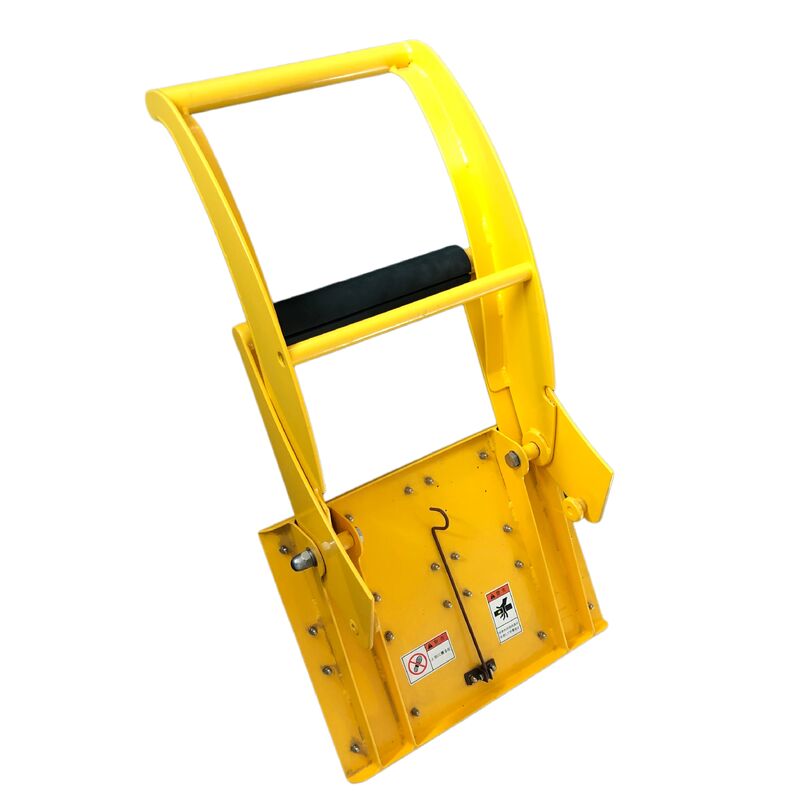
How It Works
When a vehicle strikes the barrier, the structure lifts the front wheels, causing them to lose contact with the ground. The impact force is transferred to the ground via the lever principle, with the ground absorbing the primary force. Simultaneously, the rubber plates at the base generate friction against the road surface, bringing the vehicle to a stop within a short distance.
The barrier doesn't rely on brute force to withstand impact - it transfers the force to the ground and uses friction to brake. This physical mechanism is both effective and gentle on vehicle occupants, avoiding harsh shocks.

Frequently Asked Questions
Q1: What is this product?
A lightweight mobile crash barrier used for construction zone isolation to prevent vehicle intrusion.
Q2: What scenarios is it suitable for?
Low-speed urban sections, municipal road construction, residential work zones, temporary traffic control, and other occasions with speed limits of 30 km/h or below.
Q3: What is its most outstanding advantage?
Lightweight. At 13.4kg, one person can carry it. Fold it up and put it in the trunk - take it out and use it whenever needed.
Q4: How does it stop vehicles without electricity?
Pure mechanical principle. When a vehicle hits it, the barrier lifts the front wheels, transferring the impact force to the ground, and stops the vehicle through friction between the rubber plates and the road surface.
Q5: Can it be used without a power source on site?
Yes. No external energy is required - just take it out of the trunk, unfold it, and place it.
Q6: What about the material?
Aluminum profiles plus rubber. Aluminum is light, strong, rust-resistant, non-combustible, and recyclable.
Q7: Will it fade after prolonged outdoor use?
The surface is treated with electrostatic powder coating. The yellow color is highly visible and resists fading and rusting even under sun and rain.
Q8: Can a guide sign be installed?
The side handles allow quick attachment of a cold-light arrow guide sign, visible at night, providing guidance and warning.
Q9: Is deployment troublesome?
Not at all. Lay it flat, pull it open, place it in position, check ground contact - two minutes, one person.
Q10: Does it need to be locked after unfolding?
No. No locking mechanism - once fully unfolded, it stays in place by its own structure and weight.
Q11: Can it be reused after an impact?
It depends. Minor deformation with normal function - reusable. Severe deformation - must be replaced.
Q12: What are the absolute prohibitions?
Use on sections exceeding 30 km/h, use without full unfolding, place rubber plate facing up, reuse after deformation, or unauthorized modification.
Q13: Where is it manufactured?
China, with strict quality control in production.
Q14: Besides being lightweight, what other advantages?
No power needed, weather-resistant, low maintenance, replaceable rubber plates.
Q15: What vehicles is it suitable for?
Small vehicles - cars, SUVs, and similar.
Q16: What vehicles is it not suitable for?
High-speed vehicles, heavy trucks, large buses.
Q17: Can it be used on wet or slippery roads?
It is recommended for use on flat, solid ground. Wet or slippery surfaces affect braking performance.


 Your message must be between 20-3,000 characters!