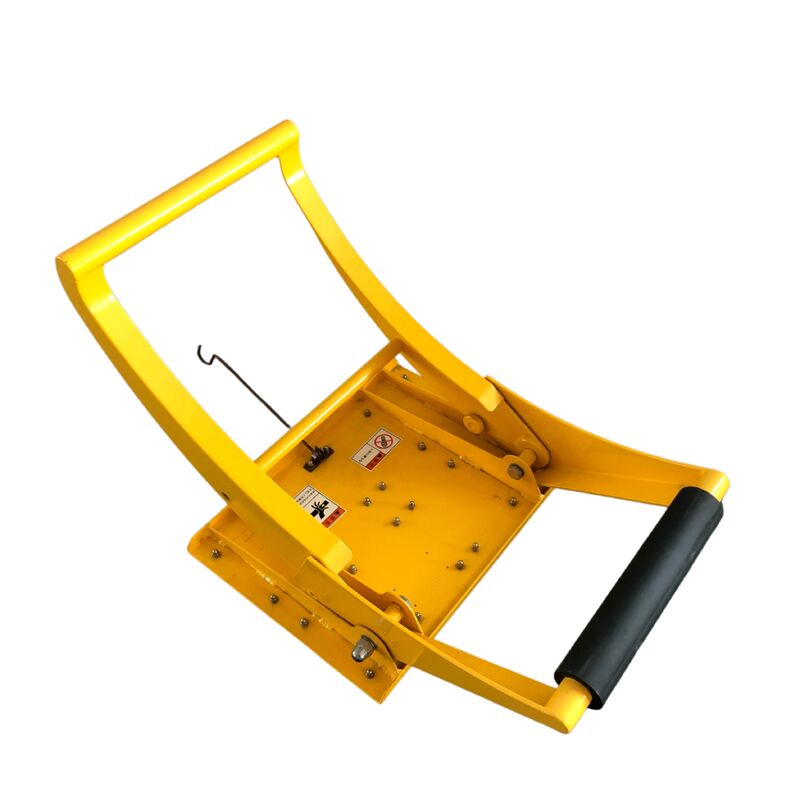
How It Stops Vehicles
Yes. Not by brute force, but by physics. When a vehicle strikes the barrier, the structure lifts the front wheels, causing them to leave the ground. The impact force is transferred to the ground via the lever principle, with the ground absorbing the impact. At the same time, the rubber plates at the base generate friction against the road surface, bringing the vehicle to a stop within a short distance.
No electricity, no hydraulics - purely mechanical. So whether it's rain, snow, high heat, or low temperatures, it works every time.

Frequently Asked Questions
Q: What is the main purpose of the product?
It is used in scenarios such as low-speed urban roads, municipal construction, residential work zones, and temporary traffic control. It forms a physical isolation barrier around the construction area to prevent vehicles from accidentally entering, while also working with arrow guide signs to direct traffic in an orderly manner.
Q: What scenarios is the product not suitable for?
It is not suitable for highways, expressways, or routes with heavy trucks or large passenger buses. It is not suitable for road sections with speed limits exceeding 30 km/h, nor for soft soil, gravel, or severely slippery road surfaces.
Q: How is the interception process specifically achieved?
- Step 1: The vehicle strikes the barrier, and the barrier's special structure lifts the front wheels, causing them to lose contact with the ground
- Step 2: The impact force is transferred to the ground through the lever principle, with the ground bearing the primary force
- Step 3: The specially formulated rubber plates at the base generate substantial friction against the road surface
- Step 4: The vehicle decelerates and comes to a complete stop within a short distance
Q: Why is it called "non-lethal interception"?
Because the product is designed to stop vehicles without causing harm to the occupants. It brings the vehicle to a smooth stop by lifting the front wheels and using friction braking, avoiding severe collisions that could injure personnel.
Q: What material is the product made of?
The main body is made of aluminum profiles, with specially formulated rubber plates at the base. Aluminum profiles offer lightweight, high-strength, and corrosion-resistant properties, while the rubber plates provide high wear resistance and anti-aging characteristics.
Q: What are the advantages of aluminum profiles?
- Lightweight: Low density contributes to product lightweighting
- High strength: Meets the structural strength required for interception
- Corrosion resistance: Resists rust in outdoor use
- Non-combustible: Will not support combustion in case of fire
- Recyclable: 100% recyclable, meeting environmental requirements
Q: What are the characteristics of the rubber plates?
Four specially formulated rubber plates at the base generate high friction against the ground upon impact, making them a key component for braking performance. The rubber plates offer high wear resistance and anti-aging properties, and can be replaced separately when worn without replacing the entire barrier.
Q: What is the surface finishing process?
Electrostatic powder coating is applied. The coating provides even thickness and strong adhesion. The yellow/orange-yellow color meets safety warning standards and offers high visibility in construction environments.
Q: What are the benefits of electrostatic powder coating?
- Strong adhesion: The coating does not easily peel off
- Excellent weather resistance: No fading even after long-term outdoor use
- Rust and corrosion protection: Effectively protects the aluminum surface
- Highly visible color: Yellow/orange-yellow provides a strong warning effect
- Low maintenance: Smooth surface is easy to clean
Q: How are multiple barriers deployed?
If a wider protection area is required, multiple barriers can be arranged side by side with spacing adjusted as needed to form a continuous protective barrier.
Q: Can it be moved quickly on site?
Yes. It can be folded up and carried away by a single person, allowing for easy repositioning to meet the needs of mobile operations.
Q: What customers is the product suitable for?
Municipal engineering contractors, residential property management, road maintenance units, temporary event organizers, traffic management departments, and other customers who require rapid deployment and flexible relocation of protective equipment.


 Your message must be between 20-3,000 characters!